
"Latin American coffee differences"
800 article(s) found

Columbia Coffee planting Information Santa Rita Manor Flavor description planting Variety producing area Information
For the exchange of professional baristas, please pay attention to the coffee workshop (Wechat official account cafe_style) by a special combination of various factors, latitude, altitude, soil, plant origin of species and varieties of coffee production in Colombia's coffee growing area, rain patterns produced by climate and tropical convergence in the coffee growing area, changing topography and luminosity in one day, throughout the year.

A brief introduction to the description of the flavor, taste and aroma characteristics of Nicaraguan boutique coffee beans
Because of the national character of the Latin American people, it is difficult for foreign buyers to do business with the Latin people directly. The Latin people do not attach importance to credit, do things too casually, the quality of shipments is uncertain, and the products exported are also mixed with sundries. But Latin America actually does have a good growing environment suitable for growing agricultural products all over the world, so we came to Nicaragua.

Introduction to Grinding Calibration of characteristic species and varieties of Coffee beans in Latin America
The characteristics of Latin American coffee beans, varieties, flavor description, grinding scale introduction Mexican coffee from Cottpe and Veracruz in the north, Plumas in the central Oaxaca region, to Chiapas in the southernmost, are all coffee-producing areas, and the flavor of each region is also different. Although there are many producing areas in Mexico, because the quality stability is not high, it has to be tried in many ways.

Sweet Santa Rita Manor, Colombia, the cultivation of boutique coffee beans, geographical location, climate, simple altitude.
The main varieties of Colombian coffee are small grains of coffee. Plants are small trees or large shrubs, 5-8 m tall, usually much branched at base; old branches gray-white, nodes dilated, young branches glabrous, compressed. Leaves thinly leathery, ovate-lanceolate or lanceolate, 6-14 cm long and 3.5-5 cm wide, tip long acuminate, acuminate part 10-15 mm long, base cuneate or slightly obtuse, rarely rounded, entire or

Introduction of manor varieties in environmental producing area of Arabica coffee bean growing area in Latin America
Medial/City/Full city/Espresso/Dark/French Columbia beans are one of the few coffee beans that range from shallow roasting to very deep roasting, ranging from light roasting to deep roasting sweetness. In such a wide range, Colombian beans will have a different appearance.
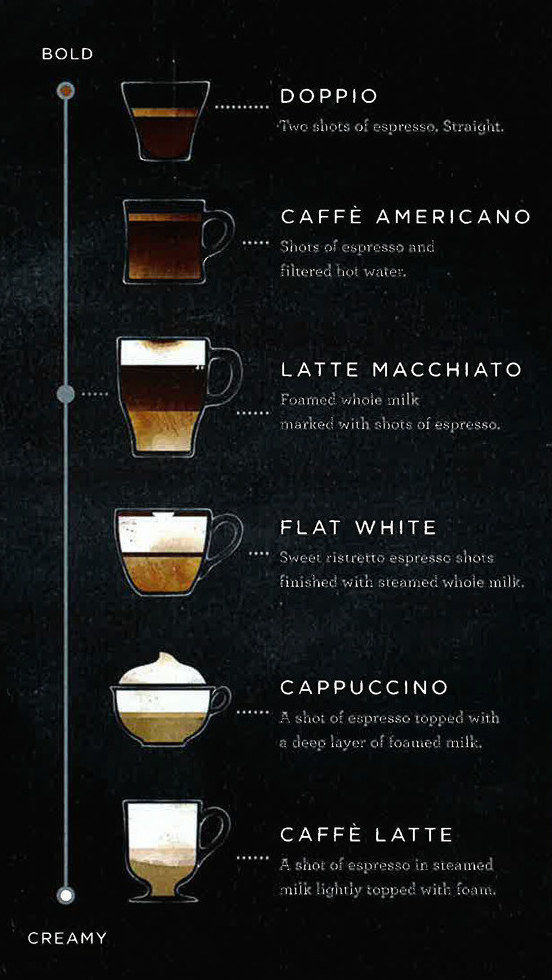
After Flat White, Starbucks launched the idea of new coffee latte macchiato espresso.
Core tip: Starbucks announced the launch of a new coffee latte macchiato in the American market (Canada, the United States and most Latin American countries) on January 5. This is their sixth drink fixed to the coffee list after the Flat White in 2015. Starbucks (feature Reading) announced on January 5 in the American market (Canada, the United States and most of the United States

An article interprets the Colombian and Brazilian flavor of Latin American coffee beans
Exchange of professional baristas Please pay attention to Coffee Workshop (Wechat official account cafe_style) Coffee is a rich and interesting world. Coffee from different continents has some common characteristics. Coffee is the product of 15 degrees latitude from the equator to the north, so it is produced in South America, Asia and Africa. However, the coffee produced from the equator to 15 degrees north latitude is too strong and bitter, so there is only some to drink.

A brief introduction to the market price of elegant and fragrant boutique coffee beans in Santa Rita Manor
The suitable climate in Colombia provides a real natural pasture for coffee. Coffee trees in Colombia are mainly cultivated in the Andes, on steep slopes about 1300 meters above sea level, where the annual temperature is about 18 degrees Celsius, annual rainfall is 2000 to 3000 millimeters, latitude 1-11 15 north, longitude 72-78 west, and the specific range of elevation can exceed 2.000 meters.

A brief introduction to the description of the flavor, taste and aroma characteristics of fine coffee beans in Santa Rita Manor
A special combination of factors, latitude, altitude, soil, plant origin of species and varieties of coffee making in Colombia, rain patterns produced by the climate and tropical convergence of coffee growing areas, changing topography, luminosity, favorable temperature range throughout the year, moderate and Rain Water distribution, including selective logging.

A brief introduction to the Origin, Development, History and Culture of Fine Coffee beans in Santa Rita Manor
The suitable climate in Colombia provides a real natural pasture for coffee. Coffee trees in Colombia are mainly cultivated in the Andes, on steep slopes about 1300 meters above sea level, where the annual temperature is about 18 degrees Celsius, annual rainfall is 2000 to 3000 millimeters, latitude 1-11 15 north, longitude 72-78 west, and the specific range of elevation can exceed 2.000 meters.

A brief introduction to the description of high-quality coffee bean flavor, taste and aroma characteristics of Santa Rita Manor
[Santa Rita, Colombia] (deeply roasted in water) sucrose, clean, medium mellow thickness, Santa Rita Manor, located in Antioquia, Colombia, treats coffee in the traditional way: picking coffee cherries by hand. Then the coffee fruit is washed and dried in a scaffolding. The environment around the Andes makes this area

Introduction to Latin American Coffee
Columbia (Colombian) aroma 3.5 minutes brightness 4.5 minutes mellow 3.5 minutes flavor 4.5 minutes aftertaste 4.5 minutes suitable for baking degree: Medial/City/Full city/Espresso/Dark/French Columbia beans are a small number of roasted coffee beans ranging from shallow roasting to very deep roasting, from light roasting clean brightness to deep roasting sweetness, in such a wide range, Colombian beans will
A brief introduction to the history and culture of the origin and development of boutique coffee beans in Santa Rita Manor
A special combination of factors, latitude, altitude, soil, plant origin of species and varieties of coffee making in Colombia, rain patterns produced by the climate and tropical convergence of coffee growing areas, changing topography, luminosity, favorable temperature range throughout the year, moderate and Rain Water distribution, including selective logging.

A brief introduction to the cultivation of boutique coffee beans in Santa Rita Manor, geographical location, climate and altitude
The suitable climate in Colombia provides a real natural pasture for coffee. Coffee trees in Colombia are mainly cultivated in the Andes, on steep slopes about 1300 meters above sea level, where the annual temperature is about 18 degrees Celsius, annual rainfall is 2000 to 3000 millimeters, latitude 1-11 15 north, longitude 72-78 west, and the specific range of elevation can exceed 2.000 meters.

A brief introduction to the treatment method of grinding degree and baking degree of sweet boutique coffee beans in Santa Rita Manor
[Santa Rita, Colombia] (deeply roasted in water) sucrose, clean, medium mellow thickness, Santa Rita Manor, located in Antioquia, Colombia, treats coffee in the traditional way: picking coffee cherries by hand. Then the coffee fruit is washed and dried in a scaffolding. The environment around the Andes makes this area
Comment on Nicaraguan Coffee Flavor Central American Coffee beans from Central America
Nicaraguan coffee Nicaragua coffee flavor characteristics: moderate acidity, fragrant and delicious. Nicaraguan coffee of high quality is in the forefront of coffee beans in the world and enjoys a good reputation. Its particles are moderate in size, mild in taste and very aromatic and mellow. Nicaragua is located in central Central America, bordered by the Pacific Ocean to the west and the Caribbean Sea to the east. The highlands in the north and the coastal plains in the east

Where does Starbucks decaf come from? Starbucks decaf coffee introduction to Starbucks homemade coffee beans
For professional baristas, please follow the Coffee Workshop (Wechat official account cafe_style), made from the best Latin American coffee beans, bringing a drupe and cocoa-like taste, especially the roasted natural sweetness in the aftertaste. Low-caffeine treatment: natural decaf processing: Latin America (Brazil, Costa Rica)

Interpretation of individual coffee bean flavor differences among American beans, African beans and Asian beans
The world of coffee is rich and interesting. Coffee from different continents has its own characteristics. Coffee is the product of the equator to 15 degrees north latitude. Therefore, it is produced in South America, Asia and Africa. However, the coffee produced from the equator to 15 degrees north latitude is so strong and bitter that only some people who drink coffee and do not know its taste will like it. In fact, the best coffee should come from the north.

A brief introduction to the History and Culture of the Origin and Development of Fine Coffee in Latin America
Brazil (Brazil) aroma 3 minutes brightness 3.5 minutes mellow flavor 4 minutes aftertaste 4 points suitable for baking: City/Full city/Espresso used as Espressode beans should not be baked too deep, because the producing area is low altitude, the bean density is low, the pot under deep baking produces coke bitterness, it is best to start the pot before the second explosion. As for high-grade Brazilian beans, they can have a wider baking range.

A brief introduction to the history and culture of the origin and development of boutique coffee beans in Santa Rita Manor.
The suitable climate in Colombia provides a real natural pasture for coffee. Coffee trees in Colombia are mainly cultivated in the Andes, on steep slopes about 1300 meters above sea level, where the annual temperature is about 18 degrees Celsius, annual rainfall is 2000 to 3000 millimeters, latitude 1-11 15 north, longitude 72-78 west, and the specific range of elevation can exceed 2.000 meters.